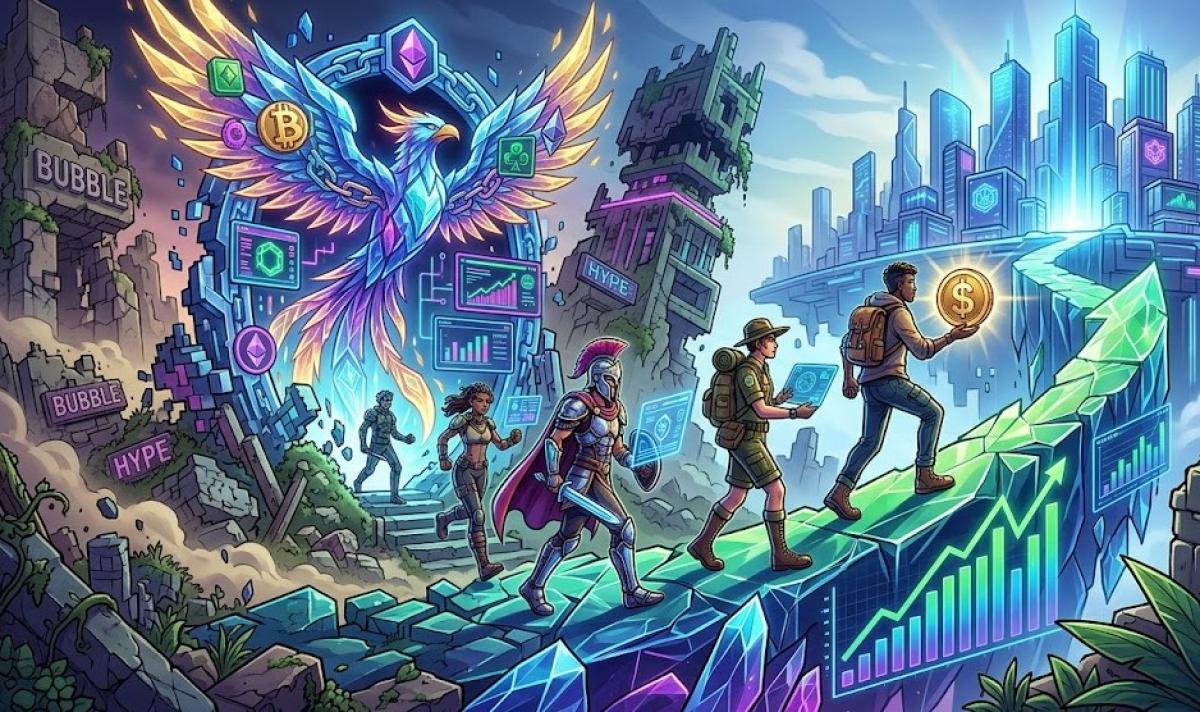
Following the collapse of a multibillion-dollar expansion cycle, the GameFi industry is entering a more disciplined phase marked by product development, regulatory adaptation, and renewed player engagement. While a large majority of projects failed to endure the previous surge, a smaller group of established platforms is advancing with updated strategies aimed at long-term sustainability.
Survivors Focus on Expansion and Product Evolution
Industry estimates suggest that more than 90% of GameFi initiatives did not survive the roughly $15 billion boom period. In its aftermath, remaining developers have shifted priorities from rapid token-driven growth to delivering functional and engaging gameplay.
One notable development is the expansion of Shrapnel into the Chinese market through a compliance-oriented launch, potentially opening access to a vast new player base under local regulatory frameworks. This move reflects a broader trend of aligning with jurisdictional requirements to enable scalable adoption.
Meanwhile, Axie: Den of Mysteries has officially launched, introducing mechanics centered on player skill rather than passive participation. The update includes active reward pools designed to incentivize consistent engagement, signaling a shift toward performance-based earning models.
Additional content updates are also on the horizon, including a forthcoming dungeon mode from Cambria, which is expected to further diversify gameplay experiences within the ecosystem.
Market Signals Reflect Renewed Confidence
The evolving development landscape has begun to influence market behavior. Tokens associated with leading ecosystems, including AXS and RON, have shown signs of recovery, supported by increased in-game activity and user participation.
This momentum suggests that investor sentiment is gradually improving, particularly as projects demonstrate tangible progress beyond speculative token dynamics. The correlation between gameplay updates and token performance indicates a closer alignment between product utility and market valuation.
Shift Toward Sustainable GameFi Models
Across the sector, developers are increasingly emphasizing user retention, gameplay quality, and long-term engagement metrics. The focus has moved away from short-lived financial incentives toward creating experiences that can sustain active communities over time.
Conclusion
As the GameFi industry emerges from a period of contraction, its trajectory appears to be defined by consolidation and maturation. Continued investment in gameplay innovation, regulatory compliance, and ecosystem partnerships is likely to shape the next stage of growth—one that prioritizes durability over rapid expansion.
Disclaimer: The data and/or information provided on this website is intended solely for general informational and reference purposes, and does not constitute financial, investment, trading, or professional advice of any kind.
All actions or decisions made based on the content of this website are entirely the responsibility of the reader. Any activity involving investments, trading, or the use of digital services carries inherent risks that may result in financial loss. Always conduct thorough research before making any decisions.
This website may include links to third-party platforms or external sites. We do not control and are not responsible for the content, policies, or activities of those external parties.
By accessing and using this website, you acknowledge and agree that all information is used at your own risk.