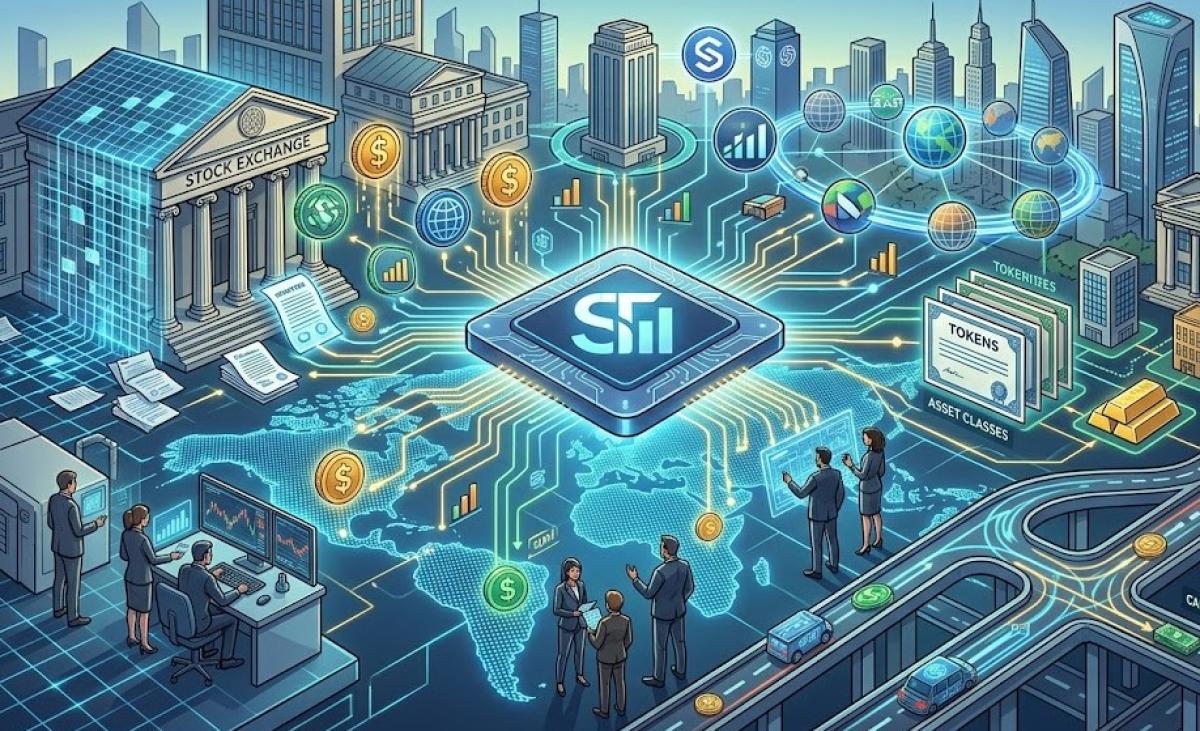
Stock Tokenization Gains Momentum as Blockchain Reshapes Global Capital Markets Growing institutional interest and strategic acquisitions highlight the accelerating integration between traditional finance and blockchain technology.
The digital asset industry continues to evolve. Following the rapid growth of cryptocurrency and decentralized finance (DeFi), a new trend is gaining broader attention: stock tokenization.
A strategic move by Bullish in acquiring Equiniti highlights the increasing integration between traditional capital markets and blockchain-based infrastructure.
What Is Stock Tokenization
Stock tokenization refers to the process of converting share ownership into digital tokens on a blockchain. These tokens represent ownership of real-world assets, including publicly traded equities and private shares.
Through this system, investors can hold their assets in digital wallets, reducing reliance on traditional brokerage systems while maintaining ownership rights.
How It Works
The stock tokenization process typically involves several key steps:
- Shares are issued by a company
- Shares are converted into blockchain-based tokens
- Tokens represent ownership (either full or fractional)
- Investors purchase and store the tokens in digital wallets
Smart contracts are used to automate ownership tracking, transactions, and distribution processes in a transparent manner.
Advantages Compared to Traditional Systems
Stock tokenization offers several notable advantages:
- Flexible trading without limited market hours
- Faster settlement compared to the traditional T+2 system
- Broader access through fractional ownership
- Enhanced transparency via blockchain records
- Global accessibility for cross-border investors
Supporting Infrastructure
For stock tokenization to operate effectively, several core components are required:
- Blockchain as the foundational system
- Smart contracts for automation
- Custodians to manage underlying assets
- Transfer agents for official ownership records
- Clear regulatory frameworks
The acquisition of Equiniti by Bullish reflects ongoing efforts to build a fully integrated ecosystem that bridges traditional finance and digital assets.
Challenges
Despite its potential, stock tokenization faces several challenges:
- Regulatory inconsistencies across jurisdictions
- Legal uncertainties around asset ownership
- Gradual institutional adoption
- Technical risks, including smart contract vulnerabilities
Future Outlook
Several developments could shape the future of stock tokenization:
- Token-based stock issuance from the outset
- Automated dividend distribution
- Integration with decentralized finance (DeFi) ecosystems
- Fully digital trading infrastructure
Conclusion
Stock tokenization represents a significant step in the evolution of global capital markets. By combining the efficiency of blockchain technology with traditional financial systems, it has the potential to enhance transparency, accessibility, and operational efficiency across the financial industry.
Disclaimer:
Information presented in this article is for informational and educational purposes only and reflects general developments in the digital asset and blockchain industry.
This content does not constitute financial, investment, legal, or other professional advice, and should not be interpreted as a recommendation to buy or sell any asset.
Cryptocurrencies and blockchain-based assets carry a high level of risk, including price volatility and regulatory uncertainty. Readers should conduct their own research (DYOR) and consult with a qualified professional before making any financial decisions.
The publisher and authors are not responsible for any losses or damages resulting from the use of information contained in this article.